
The Ancient Superfood with a Modern Case for Acne-Prone Skin
Moringa Oleifera:
The Ancient Superfood with a Modern Case for Acne-Prone Skin
A review of the research on internal supplementation for skin health
Long celebrated in Ayurvedic and traditional medicine as the “miracle tree,” Moringa oleifera is native to parts of Africa and South Asia and has been used for centuries to support overall health and vitality. Today, modern science is beginning to catch up with this ancient wisdom — and for those with acne-prone skin, the research offers some genuinely promising reasons to pay attention.
This article explores what the current evidence actually says about taking moringa internally as a supplement, with a specific focus on the mechanisms most relevant to inflammatory acne, sebum production, and skin health. We will also be transparent about where the science is strong, where it is still early, and what a realistic expectation looks like.
What Is Moringa Oleifera?
Moringa oleifera is a fast-growing tree whose leaves, seeds, and oil have been extensively studied for their nutritional and therapeutic properties. The leaves in particular are extraordinarily nutrient-dense, containing significant amounts of vitamins A, C, and E, iron, calcium, and complete protein — a rare quality for a plant source.
What makes moringa especially interesting from a therapeutic standpoint is its rich concentration of bioactive phytochemicals, including:
- Quercetin and kaempferol — potent flavonoid antioxidants
- Isothiocyanates — sulfur-containing compounds with anti-inflammatory and antimicrobial properties
- Chlorogenic acid — a polyphenol with blood sugar-modulating effects
- Tannins and saponins — compounds with antibacterial activity
- Oleic acid — a skin-supportive fatty acid particularly concentrated in moringa seed oil
It is worth noting upfront: while the mechanistic research on moringa is compelling, there are currently no published human clinical trials specifically studying oral moringa supplementation for acne. The evidence that follows is built from studies on relevant mechanisms — inflammation, blood sugar, sebum production, and the gut-skin axis — conducted in humans, animals, and laboratory settings.
The Anti-Inflammatory Mechanism — Directly Relevant to Acne
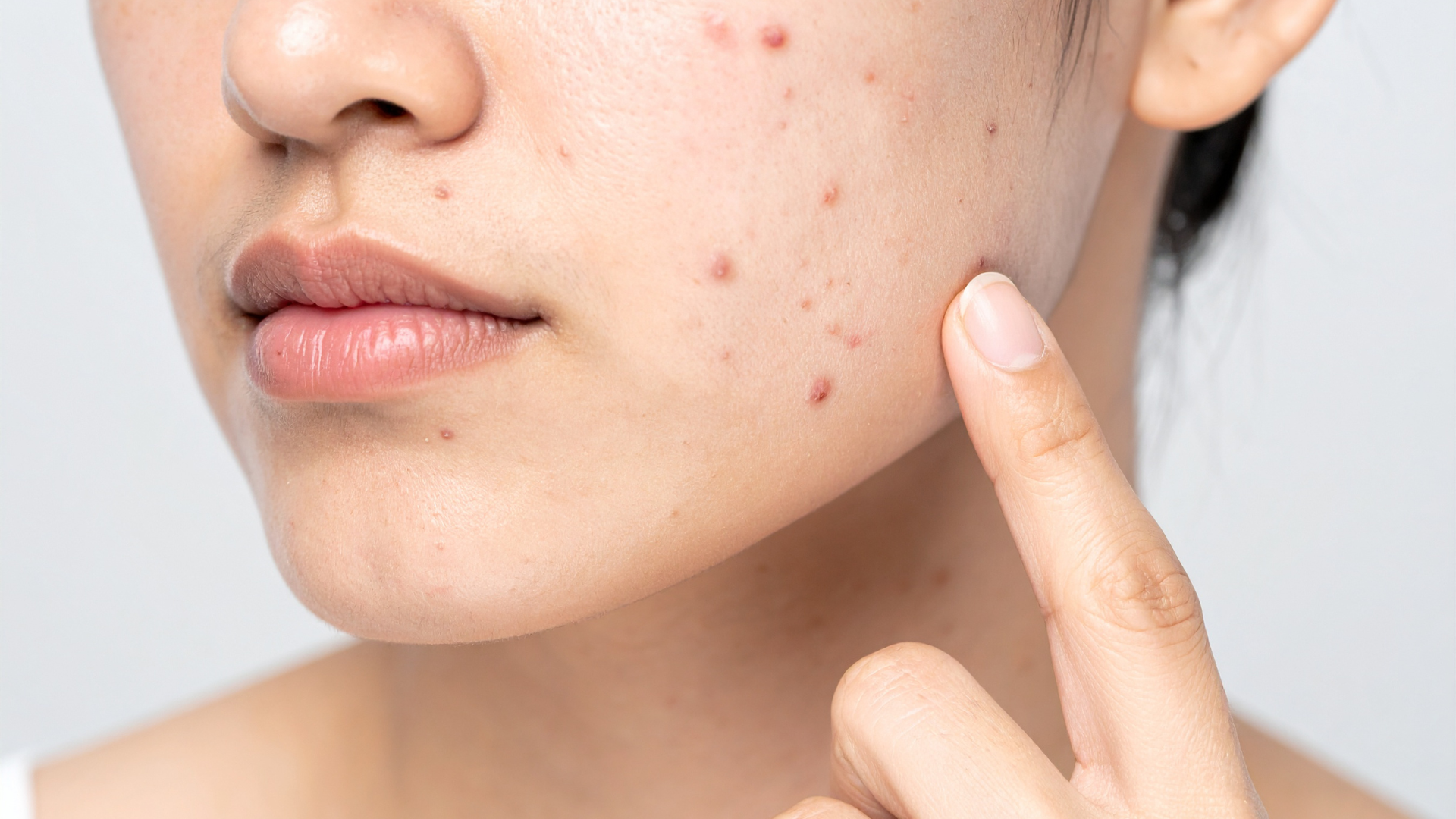
Acne vulgaris is fundamentally an inflammatory condition. While most people associate acne with bacteria and clogged pores, chronic low-grade inflammation is both a driver and a consequence of breakouts — and it plays a major role in whether lesions resolve cleanly or leave scarring.
increased systemic inflammation, and emerging evidence suggests that supporting a healthy microbiome may positively influence skin inflammation.
Animal research published in Food Science & Nutrition found that moringa leaf supplementation altered gut microbiota composition in PCOS-model rats, reducing the expression of inflammatory markers TLR4 and shifting the relative abundance of multiple bacterial species in favorable directions [4]. A separate study found that moringa polysaccharides positively reshaped gut microbiota in mice fed a high-fat diet, increasing beneficial species while reducing those associated with inflammation and metabolic dysfunction [5].
Human evidence specifically connecting moringa's microbiome effects to skin outcomes does not yet exist. However, given the broader gut-skin axis research, this represents a plausible additional pathway through which internal moringa supplementation might benefit acne-prone individuals.
What About Direct Antibacterial Effects Against Acne Bacteria?
Laboratory research has confirmed that moringa extracts have meaningful antibacterial activity against the organisms most associated with acne. A 2025 study published in SSRN found that moringa oleifera-based cream showed significant antibacterial activity against Propionibacterium acnes (now classified as Cutibacterium acnes), Staphylococcus aureus, and Staphylococcus epidermidis — with the strongest inhibition zones at a 12.5% concentration [6].
It is important to note that this and similar studies tested topical or in vitro applications, not oral supplementation. Whether internal dosing achieves bacteriostatic concentrations at the level of the skin follicle is not yet known. The antibacterial research is more directly applicable to topical moringa formulations than to supplements.
Antioxidant Support for Scarring and Post-Inflammatory Healing
For patients who already have acne scarring, moringa's antioxidant density has additional relevance. Oxidative stress plays a significant role in the formation of post-inflammatory hyperpigmentation (PIH) and in the quality of wound healing after inflammatory lesions resolve. Vitamin C is essential for collagen synthesis; vitamin E and polyphenols help protect cells from free radical damage during the inflammatory phase.
Moringa leaves contain all of these — vitamins A, C, and E alongside a significant polyphenol load. Research has confirmed that phenolic content in moringa supplements correlates directly with antioxidant activity [1]. For patients undergoing treatments like microneedling with exosomes, internal antioxidant support during and between sessions is a clinically sensible complement to the procedure.
Safety, Dosing, and Practical Considerations
Moringa leaf powder and capsules are generally well-tolerated in the doses studied. A few considerations are worth noting:
Typical Dosing
Moringa's anti-inflammatory profile is one of its most well-documented properties. A review published in a peer-reviewed journal identified several distinct mechanisms by which moringa's compounds exert anti-inflammatory effects [1]:
- Quercetin and kaempferol inhibit pro-inflammatory enzymes cyclooxygenase and lipoxygenase — the same enzymes targeted by NSAIDs like ibuprofen
- Isothiocyanates modulate the NF-κB signaling pathway, a central regulator of the inflammatory response, and reduce production of TNF-α and IL-1β — two cytokines directly implicated in inflammatory acne lesions
- Polyphenols and flavonoids reduce systemic oxidative stress, which amplifies inflammation and contributes to post-inflammatory hyperpigmentation and scarring
For someone with inflammatory acne — particularly the persistent, hormonally-driven type common in teenagers and young adults — reducing systemic inflammatory load through nutrition and supplementation is a rational and evidence-informed strategy.
The Insulin and IGF-1 Connection — The Most Compelling Pathway for Acne
Of all the mechanisms linking diet to acne, the insulin/IGF-1 axis is one of the most robustly supported in the dermatological literature. Here is how it works:
When blood sugar spikes — from a high-glycemic meal, for example — the body releases insulin. Insulin, in turn, triggers the release of IGF-1 (insulin-like growth factor 1). IGF-1 has a direct sebogenic effect: it stimulates sebaceous glands to produce more sebum, creating ideal conditions for C. acnes colonization and breakouts [2]. This is now understood to be a key biological link between sugar-heavy diets and acne.
If moringa can blunt post-meal blood sugar and reduce chronic insulin elevation, it may — indirectly but meaningfully — reduce one of the most well-established dietary drivers of sebum overproduction and inflammatory acne.
This is where human clinical trial data on moringa becomes relevant — even though it was not conducted with acne patients. In a double-blind, randomized, placebo-controlled trial published in the journal Nutrients, subjects with prediabetes took 2,400 mg per day of moringa leaf powder for 12 weeks. Fasting blood glucose and HbA1c decreased significantly in the moringa group while continuing to rise in the placebo group [3].
While this study enrolled adults with prediabetes rather than healthy teenagers, the mechanistic implication transfers: moringa has demonstrated glycemic-modulating effects in a properly controlled human trial, and lower chronic insulin exposure is biologically favorable for acne-prone skin.
The Gut-Skin Axis — An Emerging Research Area
The connection between gut microbiome health and skin conditions including acne is an active and growing area of research. Disruptions in gut bacterial diversity have been associated with increased systemic inflammation, and emerging evidence suggests that supporting a healthy microbiome may positively influence skin inflammation.
Animal research published in Food Science & Nutrition found that moringa leaf supplementation altered gut microbiota composition in PCOS-model rats, reducing the expression of inflammatory markers TLR4 and shifting the relative abundance of multiple bacterial species in favorable directions [4]. A separate study found that moringa polysaccharides positively reshaped gut microbiota in mice fed a high-fat diet, increasing beneficial species while reducing those associated with inflammation and metabolic dysfunction [5].
Human evidence specifically connecting moringa's microbiome effects to skin outcomes does not yet exist. However, given the broader gut-skin axis research, this represents a plausible additional pathway through which internal moringa supplementation might benefit acne-prone individuals
What About Direct Antibacterial Effects Against Acne Bacteria?
Laboratory research has confirmed that moringa extracts have meaningful antibacterial activity against the organisms most associated with acne. A 2025 study published in SSRN found that moringa oleifera-based cream showed significant antibacterial activity against Propionibacterium acnes (now classified as Cutibacterium acnes), Staphylococcus aureus, and Staphylococcus epidermidis — with the strongest inhibition zones at a 12.5% concentration [6].
It is important to note that this and similar studies tested topical or in vitro applications, not oral supplementation. Whether internal dosing achieves bacteriostatic concentrations at the level of the skin follicle is not yet known. The antibacterial research is more directly applicable to topical moringa formulations than to supplements.
Antioxidant Support for Scarring and Post-Inflammatory Healing
For patients who already have acne scarring, moringa's antioxidant density has additional relevance. Oxidative stress plays a significant role in the formation of post-inflammatory hyperpigmentation (PIH) and in the quality of wound healing after inflammatory lesions resolve. Vitamin C is essential for collagen synthesis; vitamin E and polyphenols help protect cells from free radical damage during the inflammatory phase.
Moringa leaves contain all of these — vitamins A, C, and E alongside a significant polyphenol load. Research has confirmed that phenolic content in moringa supplements correlates directly with antioxidant activity [1]. For patients undergoing treatments like microneedling with exosomes, internal antioxidant support during and between sessions is a clinically sensible complement to the procedure.
Safety, Dosing, and Practical Considerations
Moringa leaf powder and capsules are generally well-tolerated in the doses studied. A few considerations are worth noting:
Typical Dosing
Most human studies have used 2,000–3,000 mg per day of dried leaf powder. For general wellness and skin support, conservative dosing of 1,000–2,000 mg/day is a reasonable starting point, particularly for younger patients.
Drug Interactions
Moringa may enhance the effects of blood sugar-lowering medications. It may also interact with thyroid medications and has theoretical effects on CYP450 drug metabolism pathways. Always review the patient's current medications before recommending supplementation.
Considerations for Younger Female Patients
Animal studies have noted uterotonic effects at high doses. While this has not been replicated in human trials at typical supplement doses, conservative dosing is prudent for teenage female patients. The clinical relevance at standard doses (1–2g/day) is likely minimal, but it warrants disclosure.
Product Quality
Moringa supplement quality varies considerably across brands. Look for third-party tested products, organic certification where possible, and clear disclosure of the plant part used (leaf powder is the most studied form).
Realistic Expectations
Moringa should be framed as a supportive, adjunctive tool — not a standalone acne treatment. It is best positioned alongside a sound skincare regimen, dietary awareness, and any prescribed dermatologic treatments rather than as a replacement for them.
The Bottom Line
The case for oral moringa supplementation in acne-prone individuals is mechanistically coherent and supported by a growing body of research — even if a definitive human clinical trial specifically on moringa for acne has yet to be published. Its anti-inflammatory compounds, glycemic-modulating effects, antioxidant density, and emerging microbiome data all converge on pathways that are directly relevant to the biology of inflammatory acne.
For patients with acne-prone skin, particularly those dealing with residual inflammation, scarring, or diet-influenced breakout patterns, moringa represents a low-risk, nutrient-rich supplement with a reasonable evidence base for inclusion in a comprehensive skin health protocol.
As always, supplement recommendations should be individualized. If you are a patient curious about moringa for your skin, speak with your provider about whether it makes sense as part of your specific care plan.
References
- González-Burgos E, et al. Bioactive Compounds in Moringa oleifera: Mechanisms of Action, Focus on Their Anti-Inflammatory Properties. Nutrients. 2024. Available from: https://www.ncbi.nlm.nih.gov/pmc/articles/PMC10780634/
- Danby FW, Zouboulis CC. Pathobiology of acne vulgaris and new treatment concepts. Acta Dermatovenerol Croat. 2008. [Referenced via Supplementation with Lactobacillus rhamnosus SP1 and IGF-1/insulin/sebum research, USPTO Patent 12194068]
- Gómez-Martínez S, et al. Moringa oleifera Leaf Supplementation as a Glycemic Control Strategy in Subjects with Prediabetes. Nutrients. 2022;14(1):57. Available from: https://www.ncbi.nlm.nih.gov/pmc/articles/PMC8746299/
- Wu et al. Moringa oleifera leaf supplementation relieves oxidative stress and regulates intestinal flora to ameliorate polycystic ovary syndrome in letrozole-induced rats. Food Sci Nutr. 2023. Available from: https://onlinelibrary.wiley.com/doi/full/10.1002/fsn3.3473
- Jaja-Chimedza A, et al. A dietary isothiocyanate-enriched moringa (Moringa oleifera) seed extract improves glucose tolerance in a high-fat-diet mouse model and modulates the gut microbiome. J Funct Foods. 2018;47:376-385. [Referenced in crude polysaccharide gut microbiota study, PMC9083904]
- Qolby DZ, Adlina S, Rizkuloh LR. Exploring Moringa Oleifera Extracts in Topical Acne Treatment: Efficacy and Formulation Insights. SSRN. 2025. Available from: https://papers.ssrn.com/sol3/papers.cfm?abstract_id=5312466
- Shah MI, et al. Effect of Moringa oleifera on undesirable skin sebum secretions of sebaceous glands observed during winter season in humans. Biomedical Research. 2013. Available from: https://www.alliedacademies.org/articles/effect-of-moringa-oleifera-on-undesireble-skin-sebum-secretions-ofsebaceous-glands-observed-during-winter-season-in-humans.html
- Otuki MF, et al. Unveiling the Anti-Inflammatory Potential of Moringa oleifera: The Topical Impact of Seed Oil on Skin Inflammation and Hyperproliferation. J Ethnopharmacol. 2020.
- Mowa C, et al. Moringa oleifera and inflammation: a mini-review of its effects and mechanisms. Acta Horticulturae. 2017.
This article is intended for educational purposes and does not constitute medical advice. Please consult a qualified healthcare provider before starting any new supplement regimen.